Reason and Its Learned Cabinets
From the Jesuit polymaths of the seventeenth century to the academic provocateurs of the twentieth, the pursuit of knowledge remains a fragile negotiation between genuine inquiry and the performance of intellect.
The Master of a Hundred Arts
In the seventeenth century, Athanasius Kircher occupied a singular position in the European intellectual landscape. A Jesuit polymath based at the Roman College, he claimed a domain of knowledge that spanned comparative religion, geology, medicine, and linguistics. His magnum opus, the three-volume Oedipus Aegyptiacus, attempted to synthesize everything from Hebrew kabbalah to Arabian alchemy in a grand effort to decipher Egyptian hieroglyphs. While modern scholarship has relegated many of his specific conclusions to the realm of error, his legacy persists as a testament to the era’s insatiable, if occasionally misguided, hunger for universal connection.
The history of ideas is often a record of how we mistake the reach of our ambition for the grasp of our evidence.
Exclusion and the Private Library
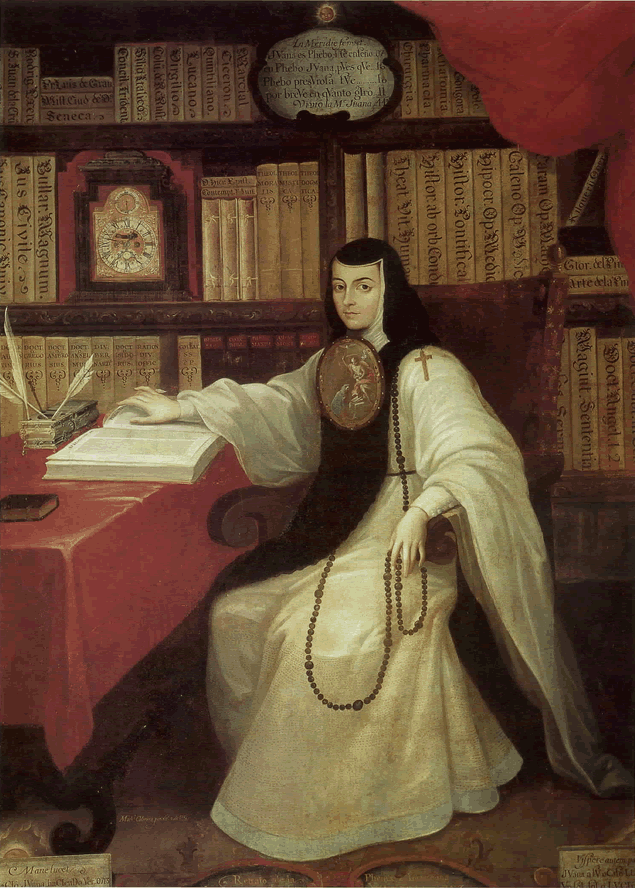
For many, the path to intellectual life was obstructed by rigid social barriers. Sor Juana Inés de la Cruz, a brilliant mind in the Spanish Empire, found her formal education curtailed by her gender. Denied entry to the university even when disguised as a male student, she turned to the private library of her grandfather and the sanctuary of the nunnery to pursue her studies in philosophy, mathematics, and science. Similarly, Giuseppa Barbapiccola, working in early eighteenth-century Italy, recognized that the perceived intellectual inferiority of women was a product of systemic educational neglect rather than nature. By translating Descartes, she actively challenged the boundaries that kept women from the discourse of natural philosophy.
The Shadows of Dogmatism
The history of philosophy is frequently rewritten by those who succeed in dismantling the systems of their predecessors. Immanuel Kant, for instance, cast such a long shadow over German thought that the period preceding him is often dismissed as a time of benighted dogmatism. This retrospective framing simplifies a complex landscape where thinkers like Damaris Cudworth Masham engaged in rigorous, mutually influential philosophical exchanges, such as her long correspondence with John Locke. Such figures, often marginalized by later canonical narratives, demonstrate that intellectual progress is rarely a linear march toward a singular truth.
We often mistake the silence of the historical record for the absence of a voice.
The Calculus of Ideology
Even the most technical inquiries are not immune to the gravitational pull of ideological commitment. Karl Marx’s shifting stance on infinitesimals—moving from an initial endorsement to a later dismissal of the concept as a chimera—illustrates how a thinker’s broader dialectical framework can color their engagement with mathematical rigor. The tension between Marx’s evolving views and the differing perspectives of his contemporaries suggests that the interpretation of formal systems is frequently inseparable from the social and political commitments of the interpreter.
The Performance of Rigor
In 1996, the physicist Alan Sokal exposed the vulnerabilities of academic discourse with a deliberate hoax, submitting a nonsensical paper to a cultural studies journal to test whether its editors would prioritize ideological alignment over intellectual substance. The resulting affair highlighted a persistent anxiety regarding the boundaries of expertise and the susceptibility of humanities journals to jargon-heavy, flattering prose. Whether through the parodies of pedantry on the Renaissance stage or the modern sting operations of the academy, the figure of the pompous know-it-all serves as a perennial reminder that the appearance of erudition is not a substitute for the substance of inquiry.